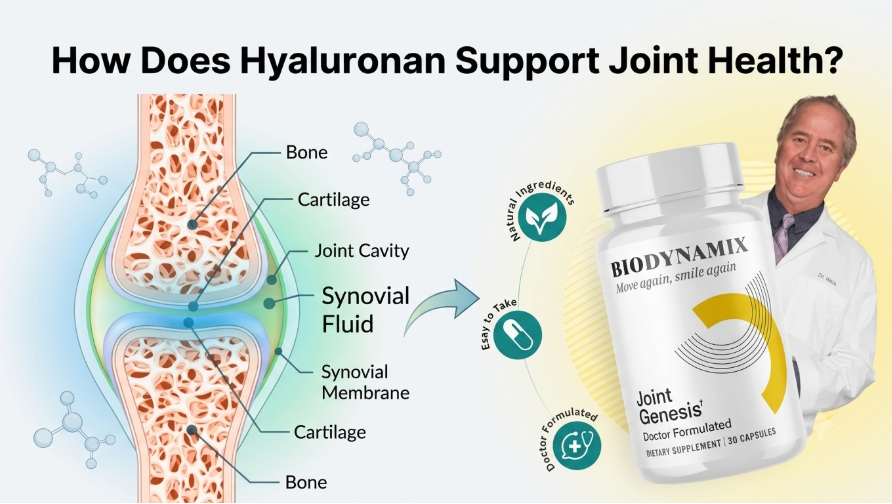
When you hear cracking sounds when going up the stairs, or notice that your joints aren't as flexible as they once were, it means you may be suffering from a lack of hyaluronan. Hyaluronan is the substance that ensures your joint fluid is viscous, lubricated, and acts as a buffer — yet as we get older, we produce less and less of this substance.
This article examines how hyaluronan works as an ingredient in joint care, what studies of oral supplements based on hyaluronan can tell us, and how to think critically about one specific product in this market, Joint Genesis. Not medical advice in any way, just some insight into the science behind the marketing.
What Is Hyaluronan?
Hyaluronan, also known as hyaluronic acid (HA), is a naturally produced compound that serves as a constituent of synovial fluid that provides lubrication for joints. This is because the compound adds viscosity to the fluid allowing cartilages to glide over one another rather than grind.
It is important to note from the outset that hyaluronan is not unique to joints. Hyaluronan exists in skin, connective tissues, and even eyes. This explains why hyaluronan is used in cosmetics and eye drops. In relation to joints, it is the viscosity and lubricating property that is most sought after.
How Hyaluronan Works in the Joint
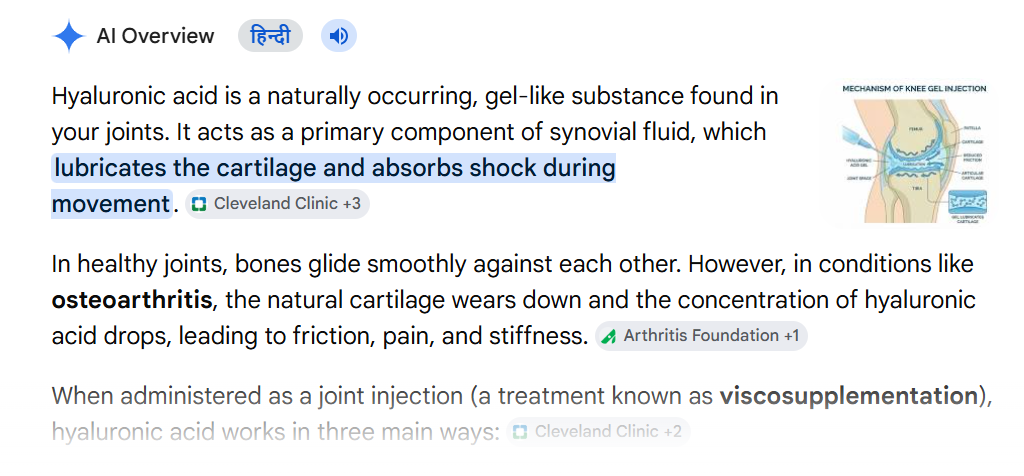
Synovial fluid in healthy joints acts similar to egg whites; it is viscous enough to provide cushioning against shocks, but fluid enough to facilitate movements. As hyaluronic acid decreases with age, synovial fluid becomes less viscous, leading to increased friction and discomfort in the joints.
There are two primary methods for treatment and prevention of joint problems:
- Injection of hyaluronic acid — the solution is injected into the joint by a healthcare provider. For many years, it is used as a nonsurgical alternative treatment of osteoarthritis, although scientific evidence about its effectiveness is rather weak and procedures may cause pain.
- Hyaluronan supplements — pills and powders that are meant to increase level of HA in joints after absorption from the stomach.
Oral administration is more recent and contentious but has received greater attention from researchers. According to a 2025 study that involved rat models and human participants in clinical trials, oral intake of HA decreased the progression of arthritis, pain, and cartilage injury in the subjects and is suggested by the researchers to be investigated as an option for joint nutrition rather than a conclusive finding.
Studies that trace HA provide some mechanisms for the absorption of HA orally: in one such study, radiolabelled HA showed up in blood plasma in 15 minutes after its oral ingestion and was later found to accumulate in connective tissues, vertebrae, skin, and even synovial spaces of the knee and tarsal joints for up to 48 hours after ingestion. This is good proof that the oral intake of HA can reach the joint tissue which previously seemed to be doubted.
Molecular weight is another factor to consider in studies: in one trial, oral intake of low molecular weight (50-500kDa) HA led to a decrease in pain and improved physical function over 8 weeks, whereas medium molecular-weight HA (650–1,200 kDa) had a different, inhibitory effect on synovial cells in another study — suggesting that not all "hyaluronic acid" supplements are functionally interchangeable.
What the Clinical Evidence Actually Shows
The body of evidence indicating that the use of oral HA is linked to joint benefits is legitimate but still under development.
One 2020 clinical trial carried out on 60 patients with knee osteoarthritis found a reduction in pain and stiffness and improvement in joint function among the participants receiving an oral HA supplement over 8 weeks when compared to placebo. (Source: mdpi.com)
Another 2021 clinical trial conducted with an oral HA supplement together with glucosamine and chondroitin also found improvements in joint pain and functions after 8 weeks in patients with mild knee osteoarthritis.
In comparing the delivery of HA, an earlier 2016 study found that injectable HA was superior in patients younger than 60, while oral HA was more effective in patients older than 60.
When it comes to side effects, there do not appear to be many of these associated with oral hyaluronic acid based on existing research; however, researchers indicate that further clinical trials are needed in order to verify safety in the long term, and individuals with allergies, diabetes, or blood-clotting issues should consult with a physician.
The straight truth: oral hyaluronan shows some promise on the basis of early- to mid-stage research in terms of its ability to maintain healthy joints, especially where pain is concerned, but this is certainly no panacea.
Joint Genesis: What's in It, and What to Make of the Claims
Joint Genesis is among those joint supplements that revolve around the concept of oral hyaluronan. The key ingredients used in the supplement include Mobilee (a patented hyaluronan compound), French maritime pine bark extract, ginger root extract, Boswellia serrata extract, and BioPerine (black pepper extract).
Mobilee
A hyaluronic acid matrix derived from rooster or chicken comb tissue, presented as the main ingredient in the supplement responsible for restoring synovial hyaluronan.
French Maritime Pine Bark Extract (Pycnogenol)
An antioxidant substance that is commonly investigated for its ability to minimize oxidative stress, an important factor in the deterioration of joint tissues.
Ginger Root & Boswellia Serrata Extracts
Herbal substances commonly incorporated into joint supplements due to their well-known anti-inflammatory actions.
BioPerine (Black Pepper Extract)
Included in order to enhance the absorption of other compounds in the formula.
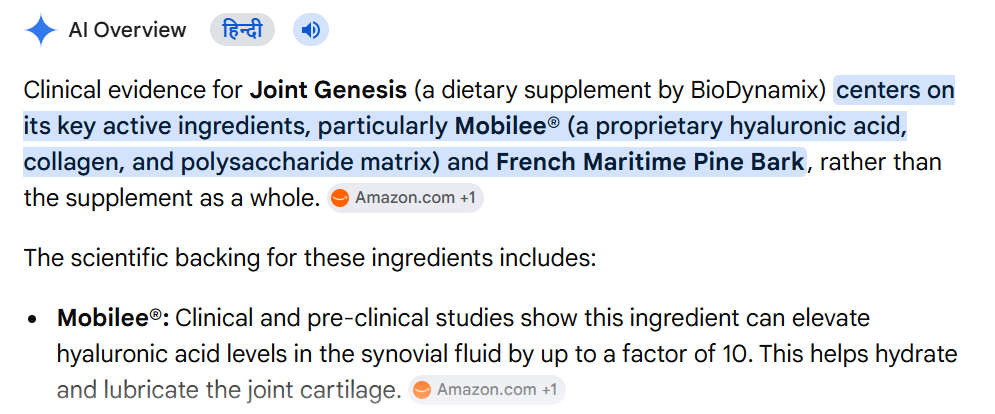
An important point to note here, however, is that the manufacturer claims that Mobilee "has been clinically shown" or "has been clinically proven" to increase levels of hyaluronan up to 10 times. This data has been provided on the product pages of the company itself or in affiliate news releases that have been put out by them. This seems highly plausible considering the formulation of the supplement, although it cannot be considered independently verified scientific evidence without confirmation in published studies.
How Joint Genesis Compares to Other Joint Health Approaches
| Approach | How It Delivers HA | Independent Research Base | Typical Cost/Effort |
|---|---|---|---|
| Joint Genesis (oral, Mobilee-based) | Capsule, daily | Builds on general oral-HA research; brand-specific claims not independently verified | Moderate, ongoing |
| Generic oral HA supplements | Capsule or powder, varies by molecular weight | Several small-to-mid clinical trials, as cited above | Lower cost, but quality varies widely between brands |
| Injectable HA (in-office) | Direct injection into joint | Long history of use, but limited high-quality evidence of effectiveness | Higher cost, requires a clinician |
| Glucosamine/chondroitin combinations | Capsule, often paired with HA | Mixed evidence; some trials show benefit when combined with HA specifically | Widely available, low-to-moderate cost |
The main differentiator Joint Genesis markets is the Mobilee ingredient and its added botanical/inflammation-support blend for joint health, rather than oral HA being a novel concept on its own.
Reasons for Using This Form of Supplement
In consideration of the general reasons for people to be attracted to this kind of supplement, a few factors appear to apply: it is less invasive than a shot, it goes together well with healthy joint practices such as exercise and weight control, and its basis — replacement of a molecule that the body naturally produces less of as it ages — makes more sense than others. People who suffer from moderate stiffness as opposed to serious joint problems are normally the type of individuals found in the studies mentioned above.
Where to Buy
Should you choose to use Joint Genesis in improving your joints, it should be noted that the company and many authentic reviews advise against buying from any other source aside from the Joint Genesis official website, as supplements purchased via third-party sites pose an increased risk of being fake and/or improperly stored. It also allows you to have access to the money-back guarantee offered by the manufacturer.
FAQs
Some clinical trials show oral hyaluronan can support joint health by reducing pain and improving function in people with mild-to-moderate osteoarthritis over 8-week periods. Results vary by individual, dosage, and the molecular weight of the HA used.
Most of the clinical trials referenced above measured results after 8 weeks of consistent use. Supplement marketing often suggests faster effects, but the research timelines are a more reliable benchmark.
Not necessarily for everyone. Research suggests injections may work better for people under 60, while oral HA showed better results for people over 60 in at least one comparative study, but more research is needed.
Mobilee is a patented HA complex sourced from a specific material with added collagen and polysaccharides. The brand's claim that it multiplies hyaluronan levels tenfold comes from manufacturer materials rather than independently published clinical data that could be verified.
Available research suggests relatively few side effects, but long-term safety data is still limited. People with allergies, diabetes, or bleeding disorders should talk to a doctor before starting.
This is a question for a pharmacist or physician familiar with your specific medications, especially if you're on blood thinners or anti-inflammatory drugs.
Final Verdict
While there is no doubt about the role that hyaluronan plays in joints and joint lubrication, there is increasing (though not conclusive) evidence indicating that oral HA supplements might benefit people who suffer from mild to moderate joint pain. The Mobilee compound used in Joint Genesis is one such supplement, but many of its most spectacular claims, such as the "10x hyaluronan," come from the manufacturer rather than independent studies. That doesn't mean that the supplement doesn't work — it just means that it is safe to view such claims with some healthy skepticism until further independent research on the whole category of oral HAs.